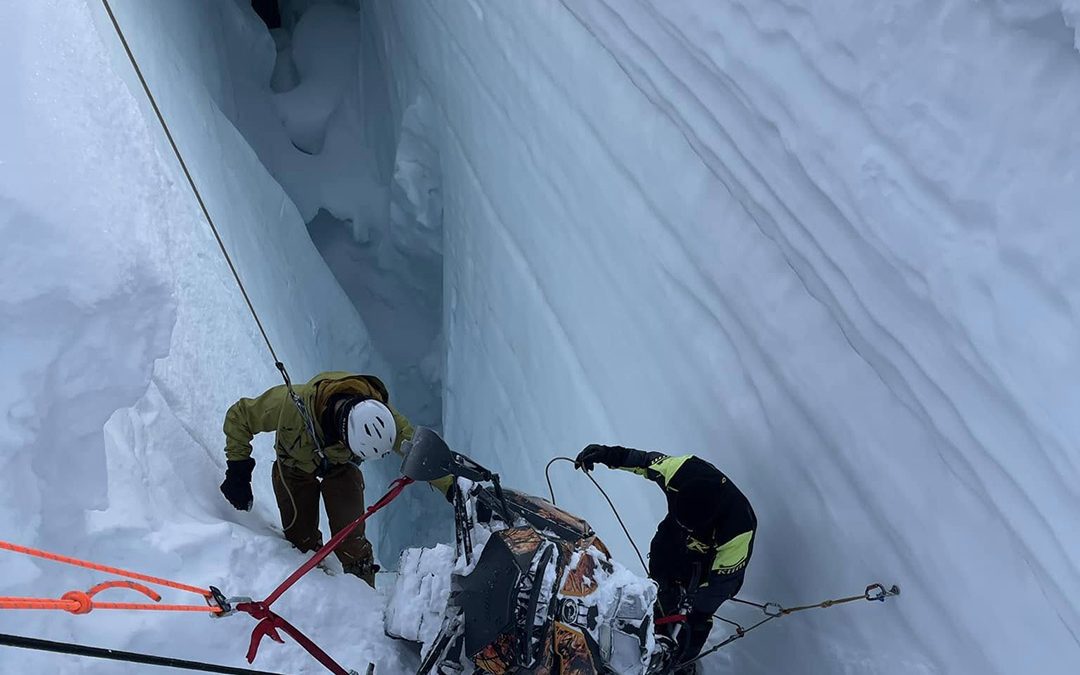
When students from an ASR safe glacier travel class heard that a rider had fallen into a crevasse not far from their cabin in interior Alaska, they headed to the scene to see if they could help. Because they were carrying the ropes, harnesses, and safety equipment required to execute a rescue, they felt confident they would be able to successfully recovery the rider, who according to those on scene, was in the ‘Give Up Stage.’ His rescuers had no intention of letting that happen.
 Clyde Hewitt was raised in Fairbanks and has more than 20 years riding experience. He completed his Avalanche Level 1 and also completed several additional clinics including the glacier travel workshop.
“When I got the call that a guy had fallen into a glacier crevasse and none of his riding partners had the gear to get him out, I decided it was definitely worth a try.”
Because Hewitt carries a Petzel RAD system, he had ropes, pullies, carabiners and everything required to extricate someone. “Plus I had two harnesses,” said Hewitt, “so I felt totally prepared.”
It took him and his partner about 30 minutes to reach the scene and they were relieved to see Dozer Bloom, another experienced glacier rider, already on site taking charge of the situation. The big challenge, Bloom didn’t have enough rope or gear to complete the rescue on his own.
“Since Dozer was already part way down to the victim, I was able to work from the top to get the necessary gear down to the victim.”
Bloom said although the victims riding friends had about 100 feet of rope, it wasn’t being used effectively and the victim was exhausted, injured and had pretty much given up hope of getting out alive.
Working as the team lead, Bloom instructed everyone to start digging to make a better access to the hole in the glacier and create a stable platform to work from. “Then I looked around at all the snowmachines sitting there and picked one that was super solid and had an after market bumper we could use as our anchor.” 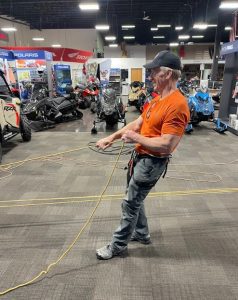
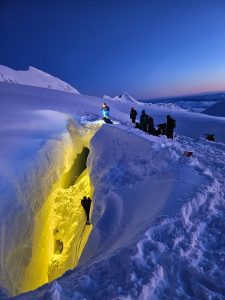
Darkness was setting in. Thanks to Hewitt’s partner, Logan Wicken, they were able to set up lights and Bloom rappelled as far down as he could until he could actually see the victim. “This guy was standing in a very narrow gap and had no hat or gloves on. And by this point, was pretty hypothermic.”
They managed to get him some heated gloves and a hat. But when they tried to have him put on the harness, he just couldn’t do it. Finally Bloom made it the last 20 feet to the victim and fashioned his backpack around him like a harness so they could lift him to safety.
“This was a real team effort,” said Bloom. “It took all of us working together to get this guy out. And it made me realize just how important it is to have the training and equipment in situations like this.”
Hewitt agreed. “The number one thing I learned is just how important training is. That made all the difference. There were some other pieces of equipment that would have been helpful, which Mike had told us to get during the workshop. I just hadn’t done that yet. But I’ll make sure I do that before I go out riding again.”
When asked what advice they would share with others about this situation, everyone agreed, if you’re going to ride on a glacier, take a class, wear a climbing harness, and make sure you have enough gear. Then carry communication and ride in a group with competent individuals you trust to have the training and gear in case something goes wrong.
“Remember, you can own all the gear in the world, but if you don’t know how to use it, none of it will do you any good,” said Hewitt. “I felt way more confident and comfortable jumping in to help because of the training workshop I’d taken with Mike Buck.”
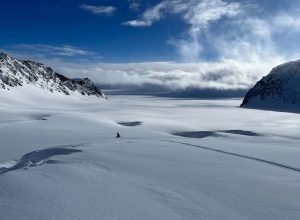 “This was definitely a team effort,” said Bloom. “We would not have gotten this guy out without all the people working together and sharing their knowledge, experience and gear.”
Buck said it’s important for all riders to understand, glacier riding is not safe.
“We do not recommend this activity,” said Buck. “But we also understand it can be incredible if you know what you are doing and have the right team of people and the right gear to take it on.”
Photos by Mike Buck and Clyde Hewitt. Training programs made possible with support from our sponsors
 |
 |
 |
 |